Best Time to Visit Roatan Honduras for Tours
The best time to visit Roatan Honduras is February to June, when rain is least likely. It is warm in every month, so the choice is about rain and storms, not heat. If your ship has already chosen the day, you can still pick the Roatan island tours that suits it.
Roatan by season
| Months | Average high | Average low | Wet days | What it means on a tour day |
|---|---|---|---|---|
| February to June | 31 °C | 25 °C | about 4 a month | The driest stretch: the best odds of a dry boat morning and a full beach day |
| July to September | 32 °C | 26 °C | about 7 a month | The hottest months, inside the hurricane season; showers come and go |
| October to January | 30 °C | 23 °C | about 13 a month | The wettest months: plan for a shower on most days, and keep the day loose |
The figures are our average of NOAA's daily weather record for Roatan's airport, from 1991 to 2020. Highs change by only about four degrees across the year. What changes is how often it rains, and that is what shapes a boat trip or a beach day.
The same pattern shows on the mainland. Honduras's weather service puts the rainiest months on its Caribbean coast in October, November and December.
Know your month?
Compare the snorkel boats, sanctuary days and private drivers by what the fare covers and where they meet you.
The hurricane window
When a storm comes near, the ports close and the tours stop. Because every fare here refunds in full up to a day ahead, you can book early and still step back.
Watch the forecast in the week before your stop. Your cruise line decides whether the ship calls at all. A tour cannot change that.
Rain, wind and the captain's call
Showers. A tropical shower is short and heavy. On a sanctuary or a drive, you wait under cover and carry on. On a snorkel boat you are wet anyway, and rain on the surface does little to the reef below.
Wind and cold fronts. Honduras's weather service names cold fronts as one of the four systems that shape its climate. A front brings wind and a rougher sea. That is what stops a boat, not the rain.
The captain's call. The boat crew decides on the day whether a stop is safe. A trip may swap a site on the exposed side of the island for a sheltered one. A tour the weather cancels is moved to another date or refunded.
Cruise days and crowds
West Bay Beach is the stop most shore excursions share, so it is where you meet the most people. Pick a tour that spends its beach time at a resort day pass, with a chair and a shower, or one that goes to a smaller beach. The fares that include a pass say so on the card.
A morning boat is the other answer. Leave soon after you dock and the reef stops come before the midday crowd.
Best months for snorkelling
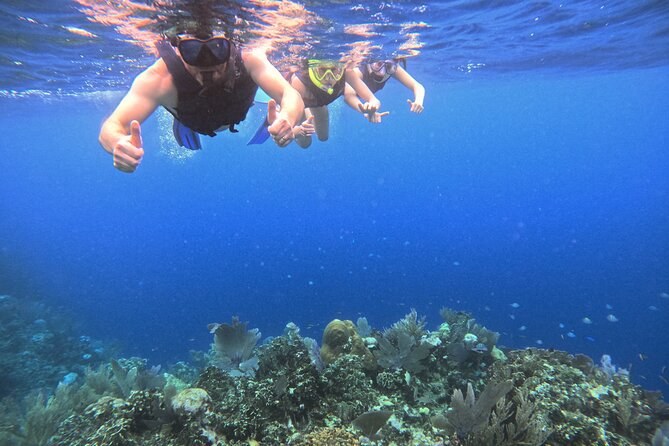
Choose February to June if the reef is the reason you are coming. April has the fewest wet days of the year, about 3. May has about 4 and March about 4. Calmer weather means an easier boat ride and a clearer look at the coral.
The reef does not close in the wet months. The West End boat reaches Blue Channel, the Aquarium and Turtle Crossing within minutes of the shore. The night snorkel starts two minutes from its French Cay base. Short trips like these are the easiest to fit around a shower.
Best months for beach days
The beach is at its best in the same dry months. June is the warmest month for nights, with lows around 26 °C (79 °F), and September has the highest daytime average, about 32 °C (90 °F).
From October to January, plan a beach stop as a bonus rather than the whole day. A resort day pass gives you a roof, a shower and a restroom if a shower comes over. Bring a dry bag for your phone in any month.
A wet-day plan
- Book a tour with a roof in it. The chocolate factory and the rum tastings are indoors, and a driver-guide can reorder the stops around a shower.
- Keep the boat early. A morning trip leaves room to move if the sea turns.
- Pack a light rain layer from June to January. The showers are short and heavy.
- Know the refund rule. Every fare here refunds in full up to 24 hours before, and a tour the weather cancels is moved or refunded.
- Give the operator your all-aboard time. One snorkel operator writes that it returns you at least two hours before the ship sails; ask yours what it promises.
Questions about timing
What is the best month to visit Roatan Honduras for tours?
When is hurricane season?
Which is the wettest month in Roatan?
Do tour prices change with the season?
What happens if it rains?
Where these facts come from
Temperatures and wet days are our average of NOAA's Global Summary of the Day for station 78703, Juan Manuel Gálvez International, 1991–2020, checked 21 September 2026. No official body publishes monthly normals for a Roatan station, so we worked them out from the daily record and counted wet days only over months it covers in full. The hurricane season and its averages are the US National Hurricane Center's. The climate zones and the four weather systems are Honduras's Servicio Meteorológico Nacional's. Every tour detail comes from the operator's own listing.
- Global Summary of the Day, station 78703, Juan Manuel Gálvez International (NOAA NCEI)
- Tropical cyclone climatology (US National Hurricane Center)
- Climas de Honduras (Servicio Meteorológico Nacional), archived copy
Next: see every month on the weather page, plan the day from the cruise port, or compare every tour on Roatan Honduras Tours.